The Terminal · The Pearl of Africa

From the world to the hinterland

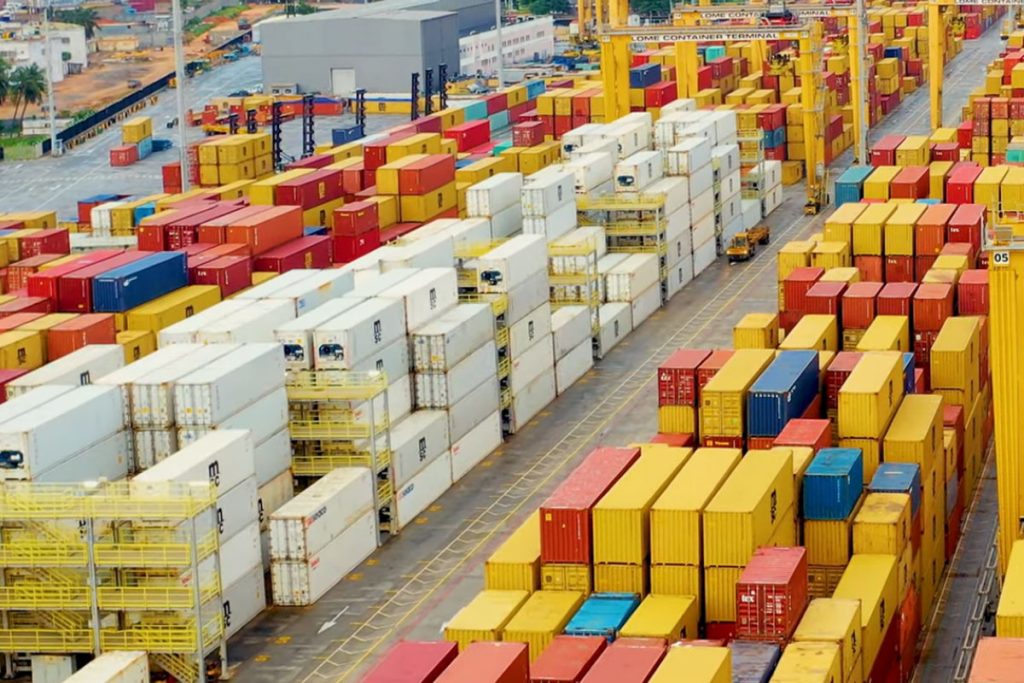
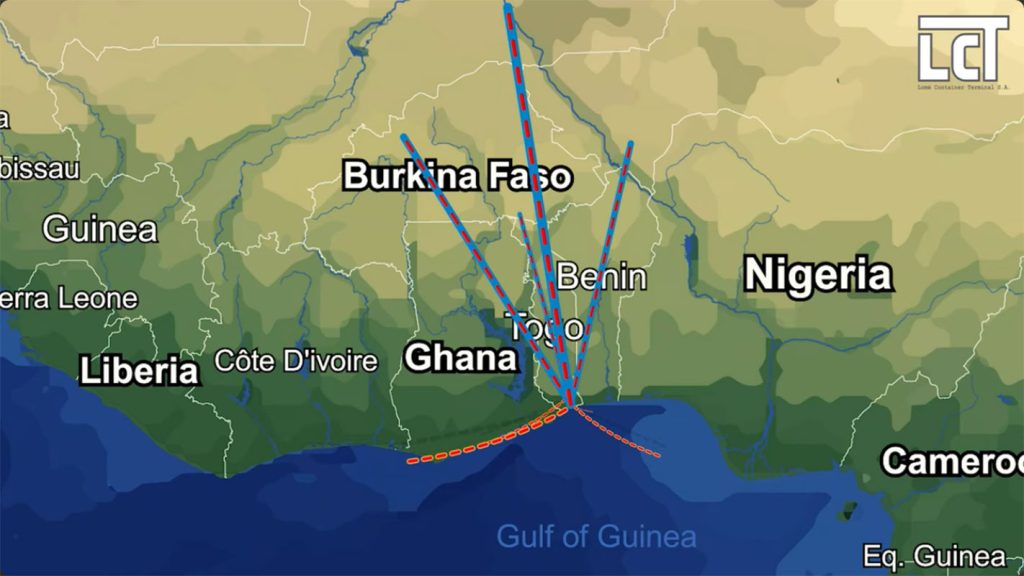
Le transbordement maritime constitue le cœur de métier de LCT. Le terminal assure également la manutention des conteneurs à l’importation et à l’exportation. Depuis le Port de Lomé, il connecte les services maritimes aux flux terrestres du Togo et aux corridors de l’hinterland ouest-africain, notamment vers le Burkina Faso, le Mali, le Niger et le nord du Nigeria.

Main capabilities · Technical data of the terminal

17,60 m
depth in the basin
1 050 m
from the dock
4
Docking stations
58,65 ha
terminal surface
24 000 EVP
for the largest vessels accommodated
2.7 M EVP
of an annual capacity

Positioning and flow

A connection point between the maritime lines and the hinterland

Transshipment is the core business of LCT. The terminal also handles containers for import and export.
From Lomé, the flows serve Togo and markets in the subregion, notably Burkina Faso, Mali, Niger and the north of Nigeria.
point of connection of maritime lines hinterland Lome container terminal

Technical characteristics

A nautical access re-calibrated in 2025

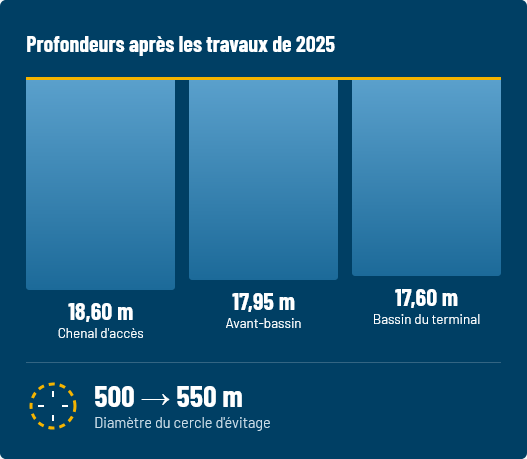
The work carried out from July 31 to September 16, 2025 deepened the LCT’s maritime accesses. The channel reached 18.60 m, the fore basin 17.95 m and the terminal basin 17.60 m. The drainage circle was expanded from 500 to 550 m.
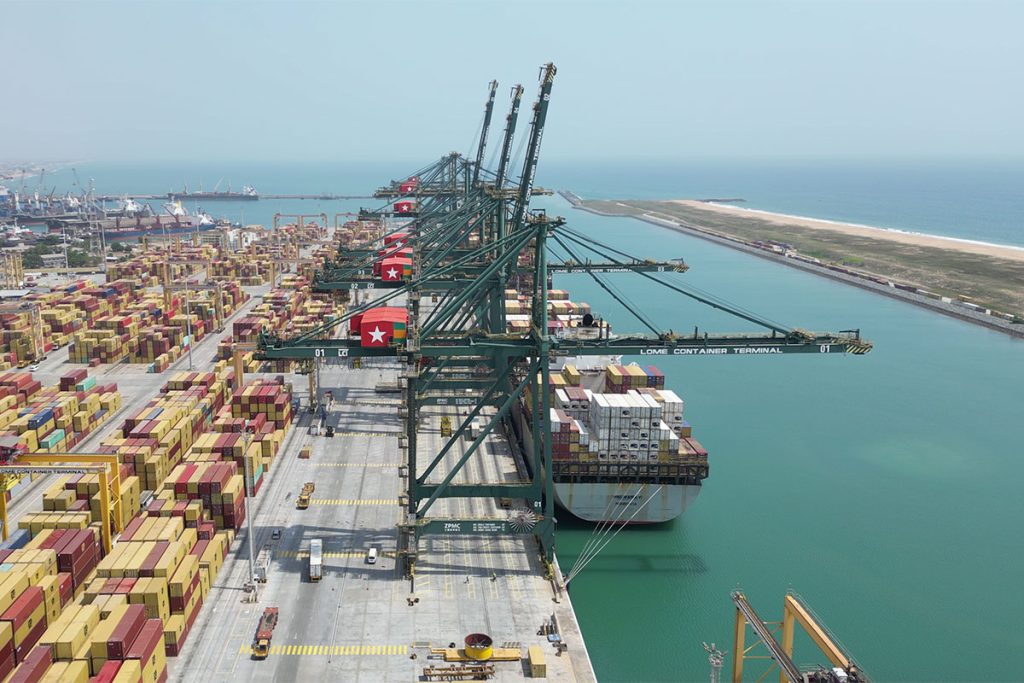
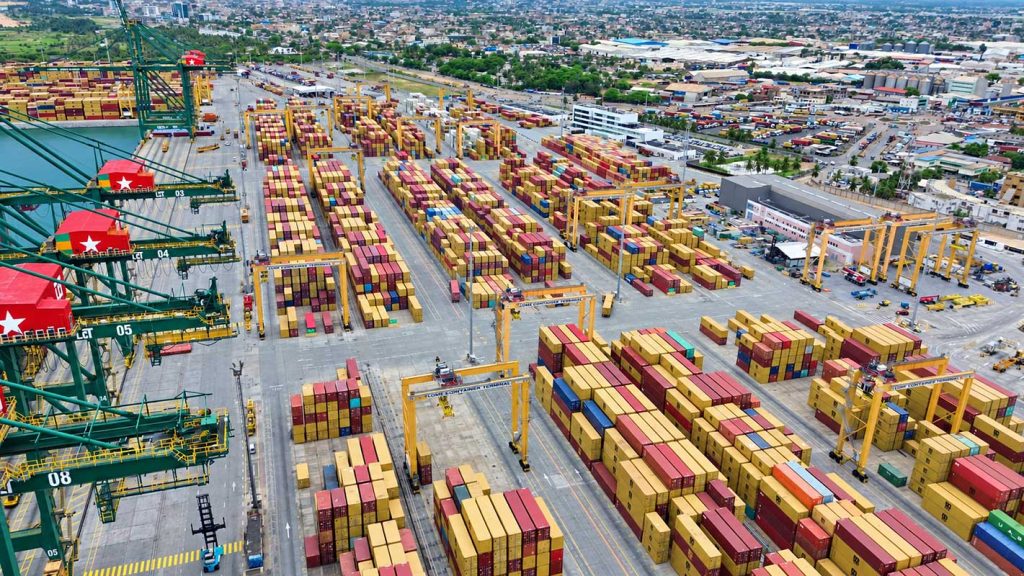
With four positions spread over 1,050 m of quay, LCT can organize several parallel stops. The stop window, the loading plan, the actual water draft of the ship, and the nautical conditions remain decisive for the preparation of each operation.
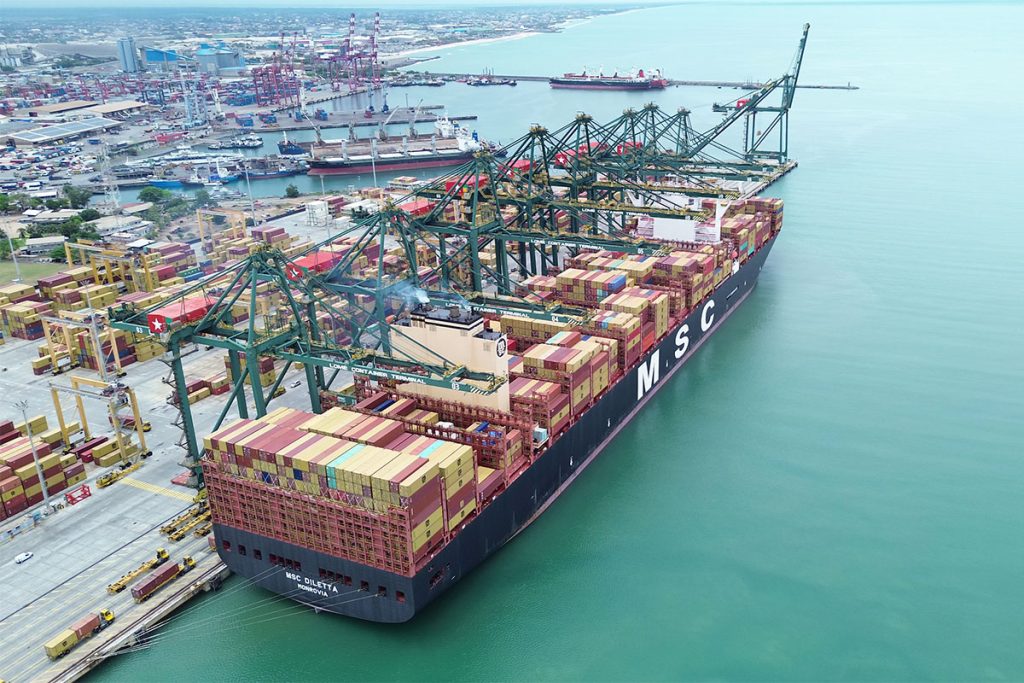
LCT MSC DILETTA

Reference scale · April 23, 2025

Container carriers from 19,000 to 24,000 TEU at full load

These dimensions allow the full loading of container carriers from 19,000 to 24,000 TEUs. The MSC DILETTA, with a capacity of 24,000 TEUs and a length of 400 m, made its first stop in Lomé on April 23, 2025.
24 000
EVP of capacity
400 m
of length

Handling equipment

State-of-the-art handling equipment

The Lomé Container Terminal (LCT) is equipped with a fleet of state-of-the-art handling equipment that includes the following elements:
LCT Portiques quay STS ZPMC
STS ZPMC dock gates
0
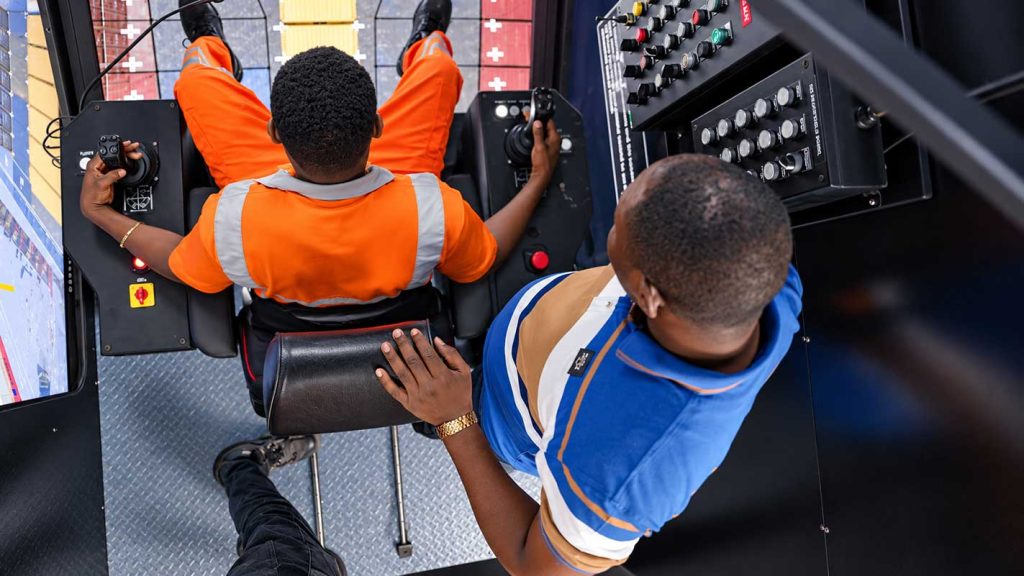
The Super-Post-Panamax gates ensure the loading and unloading of ships. Six have a range of 22 rows and five have a range of 24 rows.
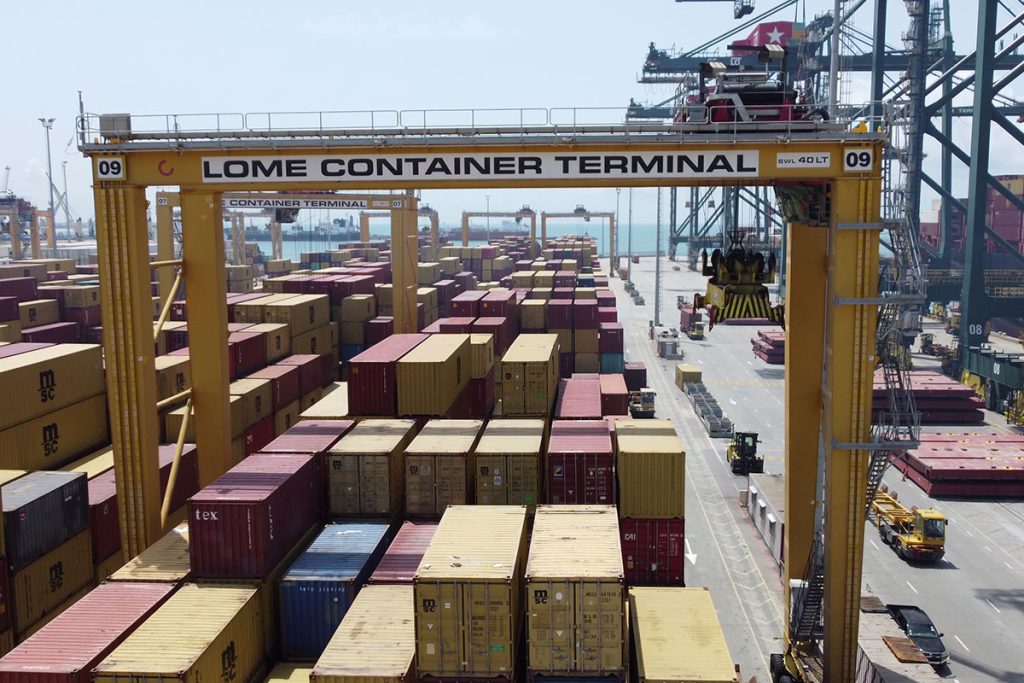
LCT-Portiques-park-RTG-Konecranes
RTG Konecranes park gates
0
These electric gates ensure the loading and unloading of containers in the park's blocks.
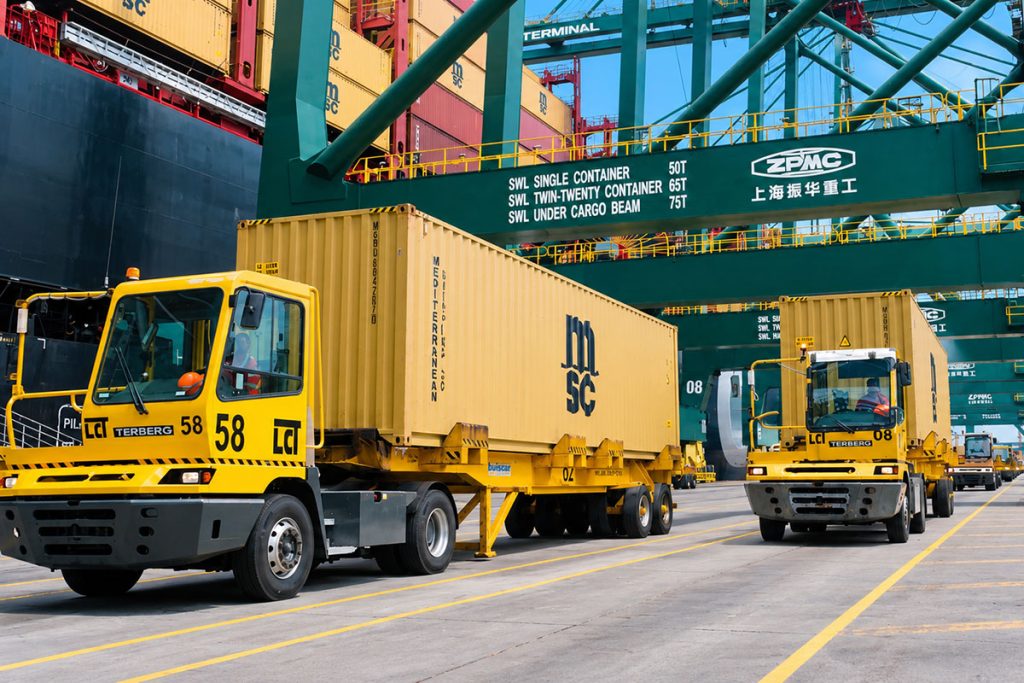
LCT Ensembles tractor-trailer
Tractor-trailer assemblies
0
They ensure horizontal transfers between the quay, the park and the operational areas.
Empotage depotage pesee inspection terminal LCT
Reefer plugs
0
The reefer station supplies the refrigerated containers during their stay at the terminal.
Empotage depotage pesee inspection terminal LCT
Containers empty lifting equipment
0
The reefer station supplies the refrigerated containers during their stay at the terminal.
Empotage depotage pesee inspection terminal LCT
Containers full lifting equipment
0
The reefer station supplies the refrigerated containers during their stay at the terminal.
Empotage depotage pesee inspection terminal LCT
Forklifts.
0
The reefer station supplies the refrigerated containers during their stay at the terminal.
54 M€

54 million euros invested in 2023

In 2023, LCT invested 54 million euros in the acquisition of new handling equipment and the expansion of its container fleet.

Operational chain

From the ship to the exit of the terminal

The handling of a container requires coordinated resources between the dock, the yard, and the gate. The Terminal Operating System, or TOS, records the transactions and assigns the movements to the operational areas.
1

Preparation for the stop

The teams establish the operational plan based on the landing window, the loading plan, and the announced volumes.
2

Handling on board

The STS gates unload, load or move the containers according to the sequence validated with the shipowner.
3

Transfer and storage in the park

The tractor-trailer units transfer the units. The RTGs position them in the assigned blocks, including the reefer zones.
4

Receiving or delivering at the gate

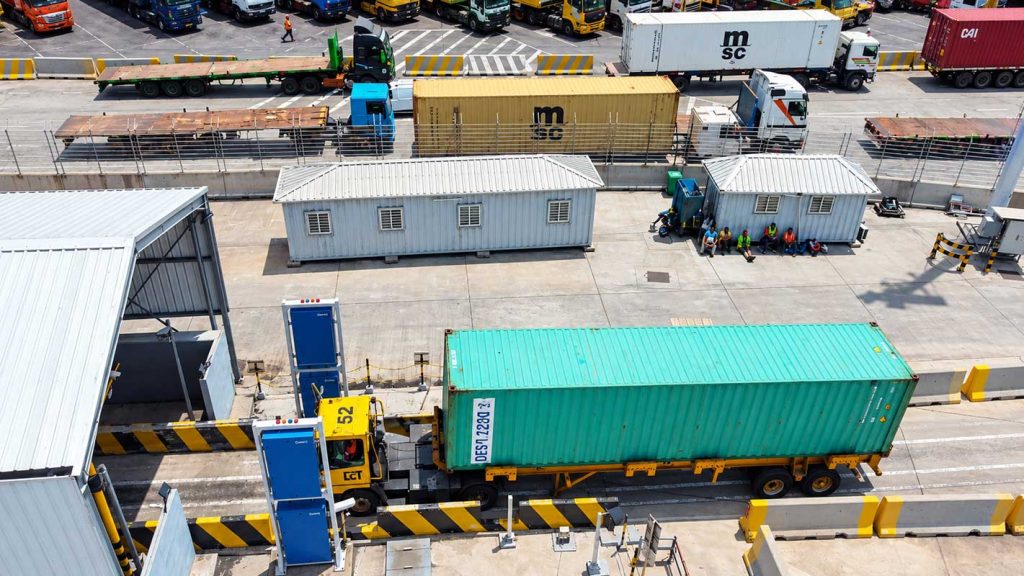
After checking the documents, the TOS records the transaction and directs the driver to the relevant block. The exit takes place after the applicable checks have been carried out.
Training-Simulator-Operators-Crane-STS-LCT

Energy

The electrical network monitored by SCADA

The SCADA system, Supervisory Control and Data Acquisition, supervises and manages the terminal's electrical network.

In the second half of 2023, LCT replaced 328 outdoor lighting lamps with 345 LED lamps. This operation reduced % the energy consumption associated with outdoor lighting at the terminal by 60%.
−60 %
energy for outdoor lighting
345
Installed LED lamps

Activity and productivity

The terminal's activity in 2023

The figures distinguish the number of containers, the volume expressed in EVP, the ships treated and the productivity at the end of 2023.
By RTG block containers at Lome container terminal
1 172 329
Containers handled in 2023
> 1.6 M EVP
Processed by the end of 2023
More than 1.6 M EVP
Ships treated in 2023
60 %
from productivity to the end of 2023

Activity and productivity

Operational indicators for 2019

These data are kept as separate historical references from the 2023 annual volumes. They do not constitute a contractual commitment for a future stopover.
6 767
container movements
34,1
GMPH, best cadence per shift
161,25
BMPH, better dock productivity per shift
26,9
GMPH, average cadence on the ship
62
BMPH, average dock productivity on the ship
40 h 36
from productivity to the end of 2023

GMPH Gross Moves Per Hour, gross movements per hour and per portico. BMPH Berth Moves Per Hour, quay movements per hour.

LCT-Portiques-park-RTG-Konecranes

Terminal plan

Identifying the main operational areas

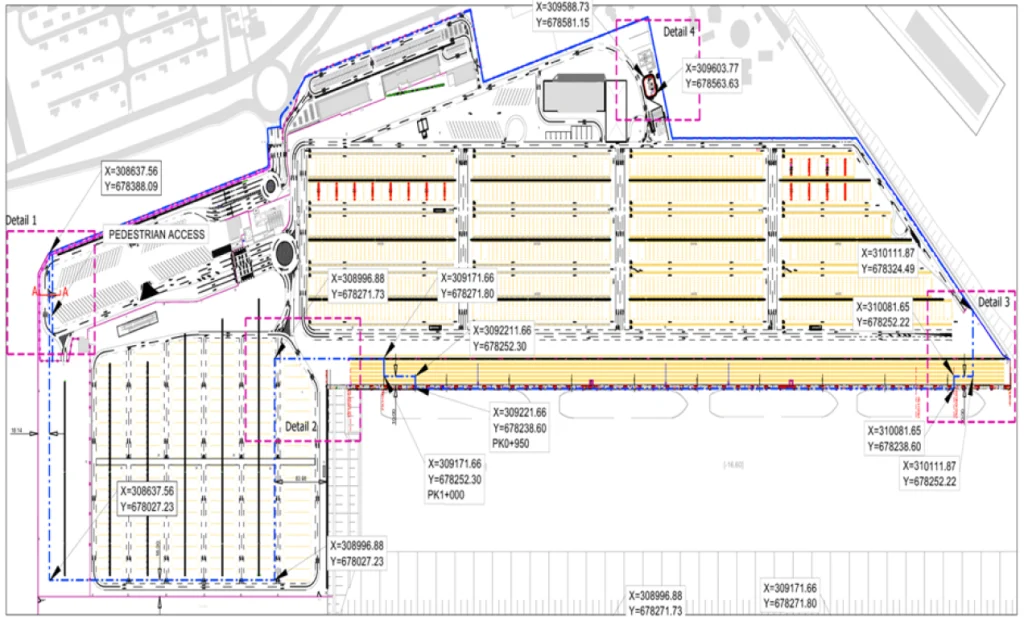
The plan locates the pier line, the park blocks, the reefer station, the control areas, the CFS, and the gate access. Select a zone to display its name and function.

Zone 1

Docks and mooring stations

1,050 meters of quay divided into four docking stations. The 11 STS docks ensure the loading and unloading of ships.

By RTG block containers at Lome container terminal

Zone 2

RTG container and block park

The 32 electric RTG hoists ensure the loading and unloading of containers in the park's blocks.

Empotage depotage pesee inspection terminal LCT

Zone 3

Reefer station

The 1,680 outlets of the reefer station supply the refrigerated containers during their stay at the terminal.

Point-Control-Container-Terminal-LCT

Zone 4

Gate, control areas and CFS

After checking the documents, the TOS records the transaction and directs the driver to the relevant block. The exit takes place after the applicable checks have been carried out.

Direct access

Go directly to the useful service

Ship program

Consult the announced stops and organize the operational follow-up.

Rates and scales

Access to the scales applicable to benefits and parking.

Formalities

Identify the documents, controls and steps required before access.

Customer area

Re-access the online services for LCT customers.

Frequently asked questions

The terminal in seven answers

What is the depth of the Lomé Container Terminal?

After the works were completed on September 16, 2025, the Lomé Container Terminal basin reached a depth of 17.60 m. The access channel reached 18.60 m, the fore basin 17.95 m and the containment circle 550 m.

The LCT can accommodate fully loaded container carriers with a capacity between 19,000 and 24,000 TEU. The MSC DILETTA, a 24,000 TEU ship, made its first stop in Lomé on April 23, 2025.

The annual capacity reported for the Lomé Container Terminal is 2.7 million TEU. The terminal has 1,050 meters of quay and four berths capable of accommodating up to four ships simultaneously.

LCT has 11 dock gates, 32 park gates, 80 tractor-trailer units, and 1,680 reefer containers.

In 2023, LCT handled 1,172,329 containers and processed 561 ships. At the end of 2023, the volume also exceeded 1.6 million TEU, and the productivity reached 29.8 GMPH.

The reefer station of the Lomé Container Terminal has 1,680 outlets intended to power the refrigerated containers.

Access to the terminal is regulated. Drivers must have a valid Terminal Access and the required documents. Visitors and service providers must obtain a permit, present an identity document and comply with safety rules, personal protective equipment and the traffic plan.

Your next operation in Lomé

Prepare the stopover, the documents and access to the terminal

Find the useful procedures or send your request to the relevant service.